
Technology transfer · Licensing · Acquisition opportunity
Thin and Flexible LED Lighting Panels
Background
Ultra-thin and flexible forms are the next big thing in general lighting and illuminated electronic displays and signs. Large-area, surface-emitting illumination panels that are sufficiently thin and can be easily flexed are a critical component for the future LED lighting fixtures, curved TV screens, bendable smartphones and similar devices.
Edge-lit lighting panels employing inorganic LEDs and sheets of light-guiding plastic are now widely used for lighting fixtures and LCD backlights. However, they suffer from the trade-off between the panel brightness and its thickness. In other words, in order to have high enough brightness for most applications, the panel needs to be sufficiently thick to accommodate the size of high-brightness LEDs coupled to an edge of the light guide. As a result, edge-lit devices still lack the thinness needed to satisfy the growing demand for high-brightness, flexible-forms panels.
Organic LEDs (or OLEDs) do not have this problem as they are inherently surface-emitting devices and can be made using quite thin and flexible substrates. However, OLEDs are currently very expensive which limits their adoption to luxury product categories. In short, there is a need for low-cost surface-emitting panels that can provide high light output at a low cost and that can be flexed with ease.
Description
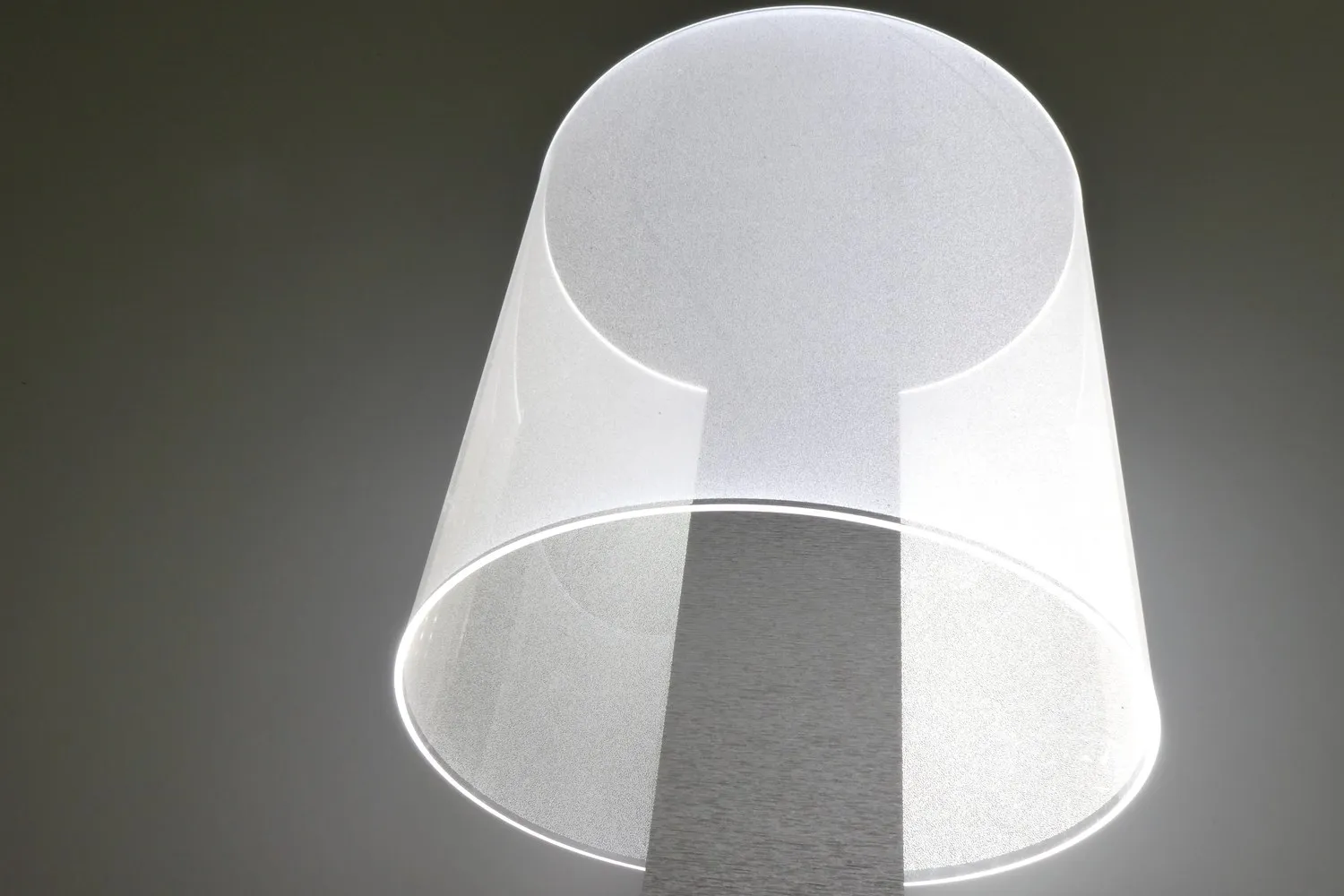
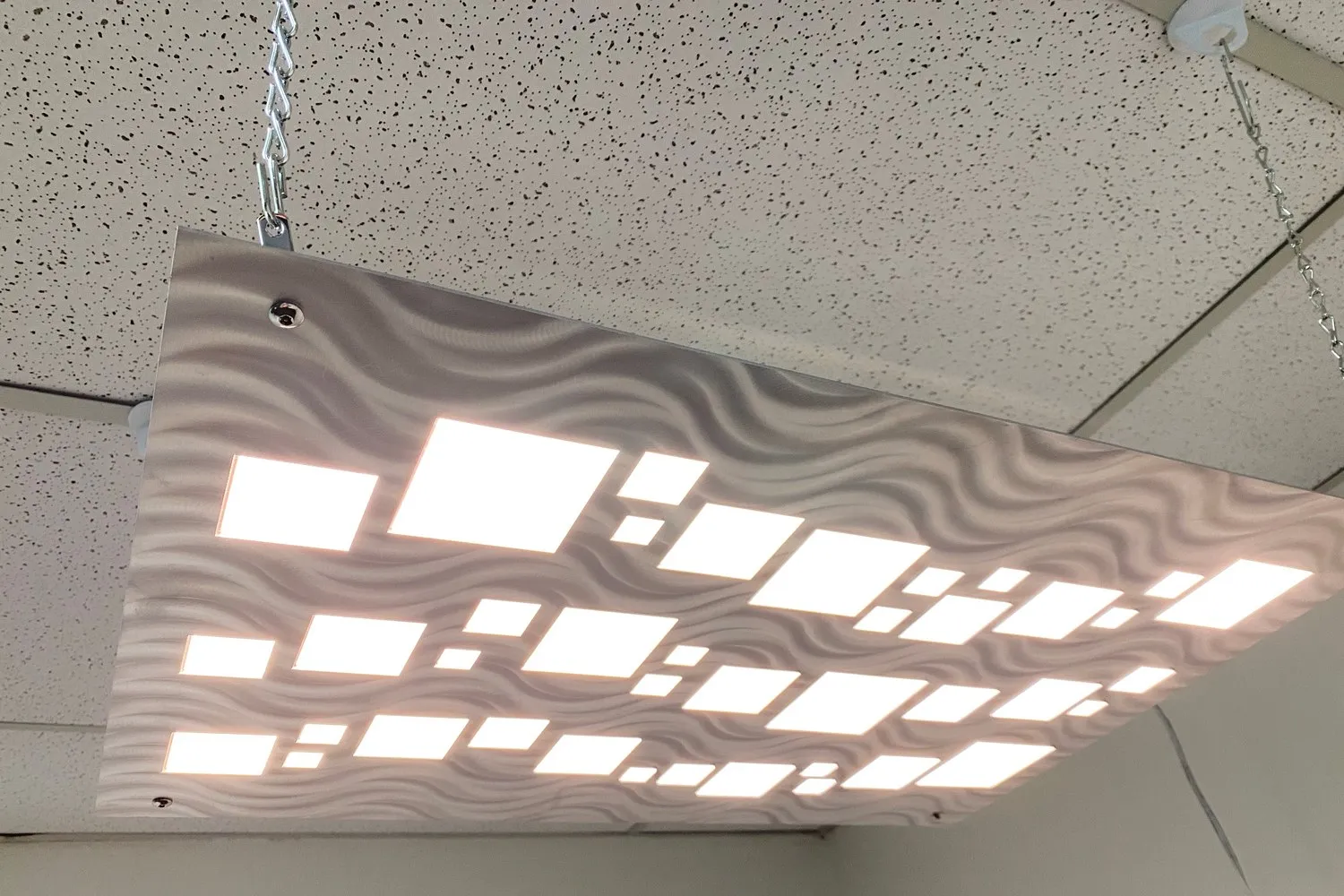
Researchers at Lucent Optics have invented an advanced light coupling technology that allows for injecting light from stock high-brightness LEDs into film-thickness light guiding sheets. In turn, this allows for using the conventional, low-cost edge-lit technology for making large-area, flexible lighting panels without the high cost associated with OLEDs. Such lighting panels can be bent to any shape, rolled, wrapped around objects and incorporated into various imaginable designs. They also incorporate all of the benefits of the latest inorganic LED technology, including high energy efficiency, long life span, dimmability, and excellent color characteristics. Because of the very low thickness, besides being flexible, the panels are also lightweight and easy to handle even at relatively large sizes. Lucent Optics also uses an efficient light extraction technology that ensures uniform light emission across the panel surface.
Lucent Optics developed this technology, CoreGLO™, in Sacramento, California. The Company’s Luminity® lighting products built on CoreGLO™ are designed and made in the USA from U.S. and imported components.
Applications
- LED lighting panels
- Backlights of LCD displays
- Illuminated signs
Advantages
- Thin and flexible
- Compatible with all types of commercial LEDs
- Energy efficient design