Product under development
Daylight Directing Window Film
Taking You to the Sunny Side
Lucent Optics’ Daylighting Film is a low-cost window film applied to the inside window panes of commercial and residential building facades. The film brightens the space by harvesting natural daylight and distributing it through the room interior without glare. Not only does it create a more comfortable environment for building occupants, but it also allows for turning electric lights off thus saving electric energy and reducing AC load.
How It Works
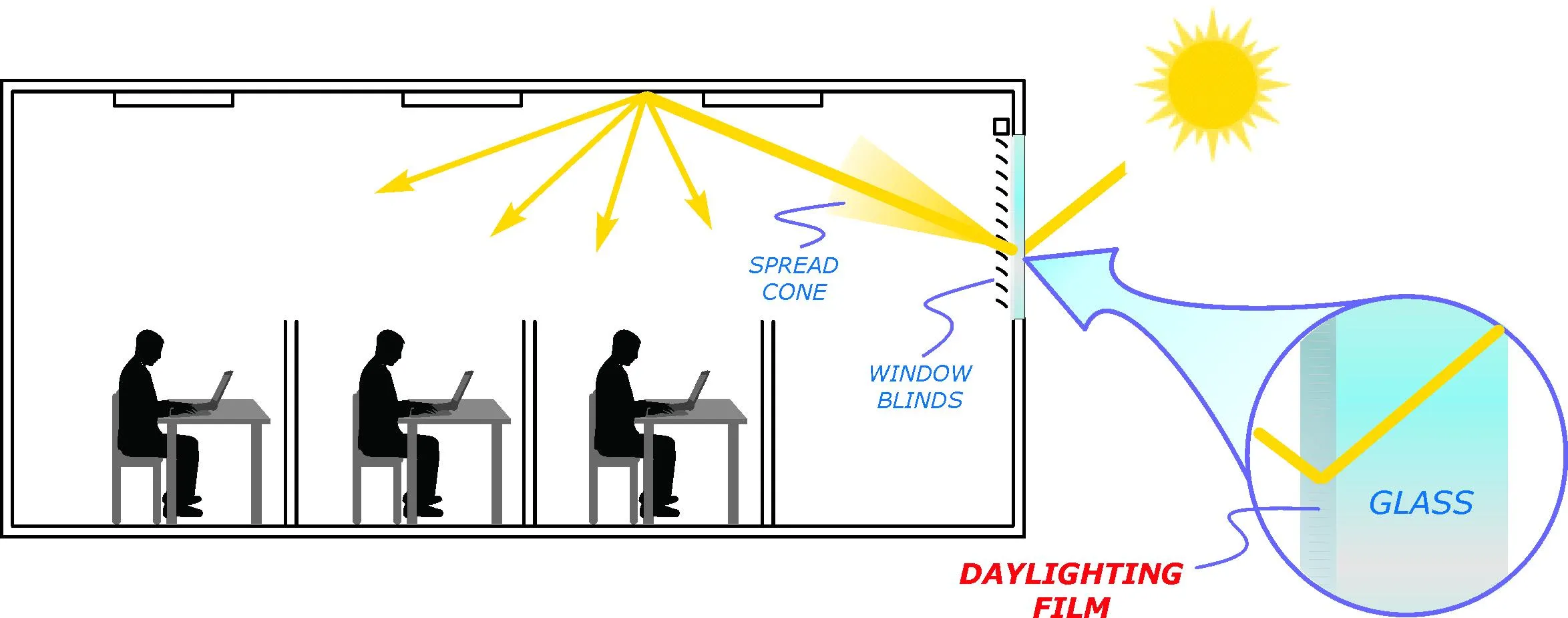
Daylighting Film captures sunlight that would otherwise hit the floor and redirects it to the ceiling using thousands of embedded microscopic reflectors that are practically invisible to the naked eye. The ceiling (which is usually white-painted) evenly scatters the redirected light throughout the space without the blinding glare usually associated with direct sunlight.
How Effective Is It?
The film itself is very efficient and can redirect up to 70-90% of the high-elevation sunlight to the ceiling. In an “idealized” case with high ceilings and with a relatively large treated window area, interior illumination enhancement can be as high as 2-3 times and up to the depth of 30-40 ft compared to the case of untreated windows. In commercial offices, it could be sufficient to keep electric lights off for the most part of the work day and save up to 50-70% of electric energy used for lighting. However, the effectiveness of the installed product is dependent on many other factors such as the relative size of the treated area, window orientation, geographic location, configuration of the interior space, reflectance of the ceiling and other indoor materials, etc. Also, various external obstructions such as nearby structures, vegetation or building facade overhangs may significantly impact sidelighting performance. Accordingly, the installation of such a product should be carefully planned.
Product Features
- Clings to window surface for easy application, removal or repositioning.
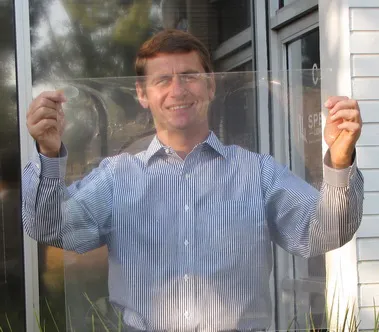
- Available in clear-view (transparent) or “frosted” appearance.
- Non-yellowing, UV resistant plastic.
- Standard product sizes: 24”×24”, 48”W×24”H. Custom sizes available.
- Can be combined with other films for added tint, color or low-E properties.
- Film thickness: 20 mil to 60 mil (depending on options).
- Maintenance free. For cleaning, use a soft cloth or sponge with mild window cleaning solutions.
Benefits
- Creates pleasant and healthy indoor environment with natural lighting.
- Increases overall illumination level in the room using the free sun’s energy.
- Extends daylit zone by injecting light deep into the building interior.
- Saves electric energy used for lighting and air conditioning (especially when used with manual or automated lighting controls).
- Eliminates or reduces glare from direct sunlight (depending on sun’s elevation and window orientation) and brightens the ceiling.
- Naturally creates a tint effect which increases with the viewing angle.
- Preserves the view (in the “Clear View” option).
- Reduces UV fading of interior materials.
- Ideal for retrofits.
- Can be used with window shades and blinds for complete daylight control.
Who Should Use It
- Commercial building owners and operators: to save energy use, reduce carbon footprint, increase employees’ productivity and mood while reducing absenteeism.
- Residential home owners and renters: to improve comfort and save money on the electric bill.
- Schools: to improve student performance and class attendance.
- Retail owners: to boost sales and improve customers’ experience.
- Hospitals: to speed up patient recovery.
- Indoor plant growers: to improve plant health and increase growth rate.
Application Notes
Lucent Optics’ Daylighting Film can be installed onto the main view windows or clerestory windows of east, south and west-facing building facades. The window should be unobstructed by trees, other buildings or façade features (such as awnings, etc.). To reduce the chance of glare, the film should be installed at the height of 6-7’ (above the view line) and can be combined with blinds or shades. When our film is used with blinds, the slats can be tilted to block direct sunlight and/or view while admitting daylight to the ceiling. DIY installation kits can also be made available upon request.
Application Examples
Scaled Room Models
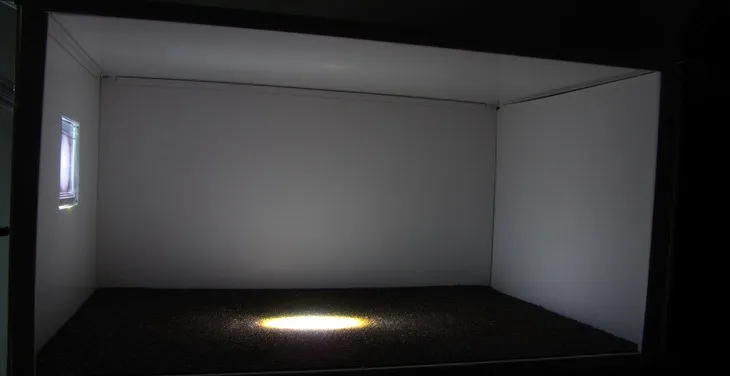
- Darker space
- Hot spot on the floor
- Carpet absorbs most light
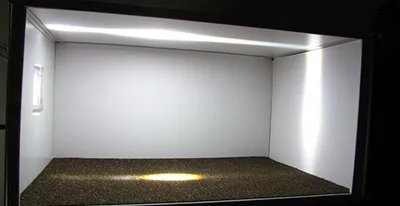
- ~3.5X brighter room
- Intensity of the hot spot significantly reduced
- Light is distributed using ceiling and walls
Residential Buildings
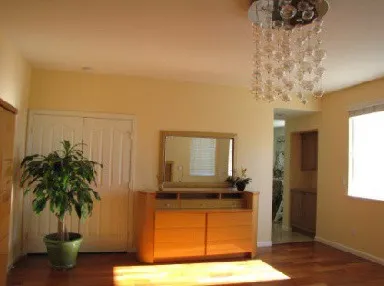
- Not enough natural light
- Hot spot on the floor with intense glare
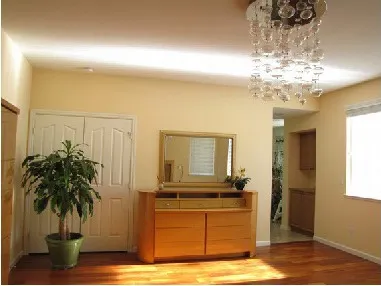
- ~2X illumination enhancement
- Transmitted light filtered
- Glare reduced